
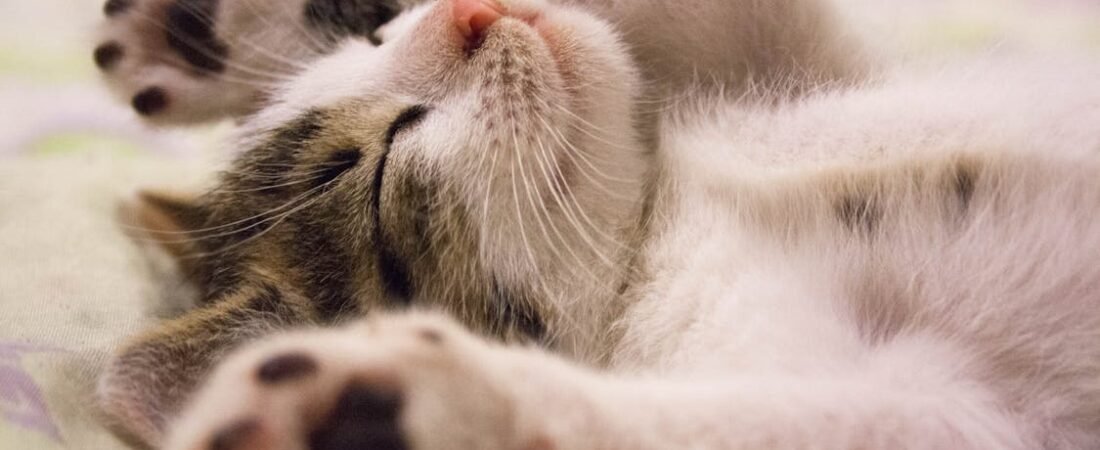
Living with a cat is a little like sharing a home with someone who speaks a completely different language. They are always communicating, but so much of it happens in signals most of us were never taught to notice. A flick of the tail, a slow turn of the head, the way their ears rotate like tiny satellite dishes. It is all saying something, and once you start paying attention, the relationship changes in the most beautiful way.
I spent the first year with our cats thinking they were simply mysterious creatures who occasionally graced me with their presence. It was not until I started watching more closely, really watching, that I realized how much they had been telling me all along. I just had not learned to listen yet.
The Slow Blink: A Love Letter in Miniature
If there is one piece of cat body language worth learning first, it is the slow blink. When a cat looks at you and deliberately, softly closes their eyes before opening them again, that is one of the most profound gestures of trust a cat can offer. In the feline world, closing your eyes in the presence of another creature means you feel safe enough to lower your guard. It is the opposite of a stare, which in cat language reads as a challenge or a threat.
The beautiful part is that you can say it back. Try it sometime: catch your cat’s gaze gently, then slowly close your eyes for a beat before opening them. Research published in Scientific Reports found that cats are significantly more likely to approach a person who slow-blinks at them. It is a conversation, a quiet exchange of “I trust you” that requires no sound at all.
The Tail Tells the Story
A cat’s tail is one of the most expressive parts of their body, and it rarely lies. A tail held high with a slight curve at the tip is a greeting, a confident “hello, I am happy to see you.” A tail tucked low or wrapped tightly around the body signals uncertainty or nervousness. And that slow, sweeping side-to-side motion that looks like a lazy wave? That often means your cat is focused, thinking, or deciding whether something in the room is worth investigating.
The one that surprises most people is the puffed tail. It looks dramatic, but it is simply a cat trying to appear bigger because something has startled them. It is not anger, it is a moment of feeling overwhelmed. The kindest response is to give them space and let the feeling pass on its own.
Ears as Emotional Barometers
Cat ears are remarkably mobile, and each position tells a different story. Forward-facing ears mean curiosity and engagement. Ears that rotate slightly to the sides, sometimes called “airplane ears,” indicate mild irritation or unease. And ears flattened back against the head are a clear signal that a cat is feeling frightened or defensive.
Learning to read ears has saved me from more than a few accidental overstimulations during petting sessions. (If your cat is grooming more than usual, those same body language cues can help you understand what is going on. Our post on understanding overgrooming in cats explores that side of things.) When those ears start to shift sideways, it is a gentle cue to pause and let your cat decide if they would like more attention or if they have had their fill. Respecting that signal is one of the fastest ways to build deeper trust.
Creating a Space Where Communication Thrives
Cats communicate most openly when they feel secure in their environment. A home with cozy hiding spots, elevated perches, and a calm atmosphere gives a cat the confidence to express themselves fully rather than retreating. If your cat seems withdrawn or you are not seeing much of their body language, it could be worth evaluating whether they feel truly settled in the space.
A Feliway Classic Calming Diffuser can help create a sense of safety, especially during transitions or in multi-cat households. It mimics the natural pheromones cats use to mark their territory as safe, and many cat owners notice their companions becoming more relaxed and expressive once it is plugged in.
Speaking of enrichment, providing opportunities for your cat to engage their natural instincts can also bring out more of their personality. Something like the Cat Amazing Interactive Treat Maze encourages that wonderful curiosity cats carry, and watching them work through a puzzle is one of the best ways to observe their body language in action. You will see the focused ears, the deliberate paw movements, and maybe even a triumphant tail flick when they claim their prize.
The Gift of Paying Attention
The more I learned to read our cats, the more I realized how generous they had always been with their communication. Every chirp at the window (which might mean it is time for a catio conversation), every head bump against my hand, every slow blink from across the room was an invitation to connect. I had just been too busy looking for grand gestures to notice the quiet ones.
Cats do not shout their affection. They whisper it, in the curve of a tail, the softness of half-closed eyes, and the gentle press of a forehead against yours. Learning their language does not require a textbook or a course. It just asks for a little stillness, a little curiosity, and the patience to sit quietly and watch. The conversations have been happening all along. All we have to do is slow down enough to hear them.
Frequently Asked Questions
Why does my cat stare at me without blinking?
A direct, unblinking stare in cat language can be a sign of alertness or even a challenge. It does not necessarily mean your cat is upset, but it is worth responding with a slow blink to communicate trust. If your cat blinks back, that is a beautiful exchange of mutual comfort.
What does it mean when my cat shows me their belly?
A cat rolling over to expose their belly is usually a sign of trust, not necessarily an invitation to rub it. Many cats will show their belly in a relaxed moment but still prefer not to be touched there. Watch for other cues like ear position and tail movement to gauge whether they are inviting contact or simply saying they feel safe.
Why does my cat headbutt me?
Head bunting is one of the warmest gestures in the feline world. Cats have scent glands along their cheeks and forehead, and when they press against you, they are marking you as safe and familiar. It is essentially your cat saying you belong to them, which in their world is about as affectionate as it gets.

Leave a Reply
You must be logged in to post a comment.