
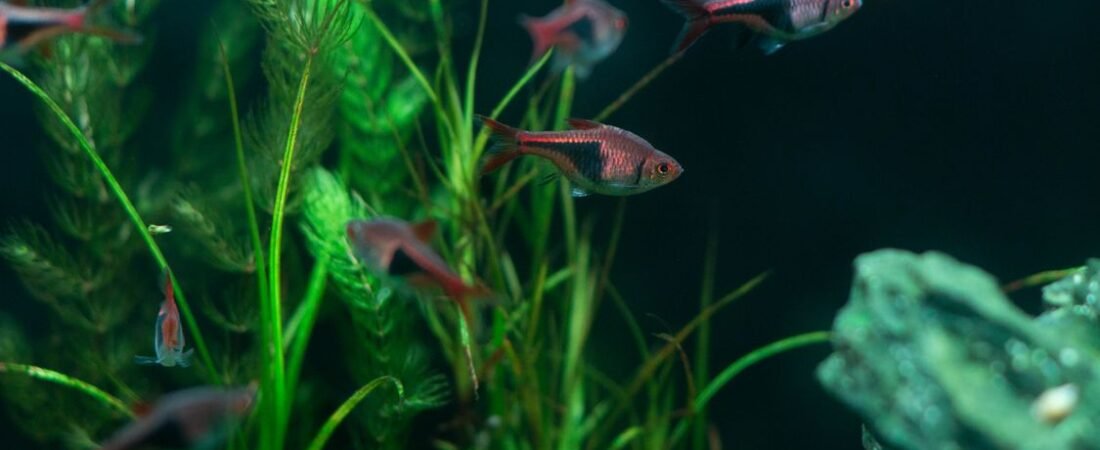
Overfeeding fish is one of the most common causes of poor water quality in home aquariums, and recognizing the signs of overfeeding fish early makes it simple to fix. It almost always starts from a good place: a fish drifts to the front of the glass, seems to be asking for more, and adding just a little extra feels like the kind thing to do. The reassuring part is that aquariums are forgiving systems, and once feeding habits shift, tanks tend to recover quickly.
There is a reason this pattern is so universal among fish keepers. Watching fish is calming, and feeding them is one of the few interactive moments the hobby offers. The pull to do more of that is completely understandable. But it is one of the few areas where doing a bit less turns out to be the more loving choice.
What Overfeeding Actually Does to Your Tank
When uneaten food settles at the bottom of a tank, it begins to break down and release ammonia into the water. This puts pressure on the beneficial bacteria that form the backbone of a healthy nitrogen cycle, often causing water quality to degrade faster than those bacteria can compensate. The result is cloudier water, rising nitrate levels, and sometimes a faint but persistent smell that is hard to trace back to its source.
Algae also thrives when there are excess nutrients in the water column. A tank that battles consistent green patches or a stubborn haze despite regular water changes is very often dealing with the effects of surplus food rather than a filtration problem. Some aquarists spend months adjusting lights and cleaning glass without realizing the root cause sits in the food container. For more on managing water quality once feeding is under control, our gentle guide to the weekly water change ritual walks through what a sustainable maintenance routine can look like.
Over time, the decomposing matter can also create low-oxygen pockets near the substrate and stress fish in ways that are not immediately visible. Fin deterioration, unusual lethargy, and a general dullness in coloration can all be early signals that the water chemistry has shifted in a direction that fish are quietly struggling with.
Signs You Might Be Overfeeding Your Fish
The clearest signal is uneaten food still visible in the tank five minutes after feeding. Small flakes or pellets sinking to the substrate, collecting around the filter intake, or drifting into the corners of the tank all point to more food than the fish are actually consuming. Once you start looking for it, it is often surprisingly easy to spot.
Cloudiness that returns quickly after a water change is another strong indicator. Healthy, well-fed tanks tend to clear up fairly well between feedings. A persistent haze, especially one with a slight yellowish or whitish tint, often reflects organic material breaking down in the water faster than the filter can process it. Our post on why a new fish tank turns brown touches on some of these same water chemistry dynamics if that context feels helpful.
Fish that appear noticeably rounder or more bloated over several weeks are also worth paying attention to. It is easy to miss because the change is gradual, but comparing photos from a few months apart can be telling. Fish, like most animals, will eat beyond what they need if food is constantly available.
Finding the Right Portion Size
A guideline that many experienced aquarists rely on is the two-to-three minute rule: offer only what your fish can fully consume within that window, then remove anything remaining with a small net or gravel siphon. Starting with a smaller amount than seems right and working up from there is a gentler calibration approach than reducing an already generous portion all at once, which can feel harder to stick to.
Most freshwater community fish do well with one or two small feedings per day. Building in a fasting day once a week, where no food is added at all, gives the tank a chance to process any lingering organic material and helps fish maintain a healthy weight over time. It also makes the substrate much easier to evaluate: without fresh food masking the bottom, it becomes clear whether old food has been accumulating unnoticed.
Fish behavior is not a reliable guide to how much they need. A fish that swims eagerly to the surface when someone approaches the tank is responding to learned anticipation, not genuine hunger. Most fish will beg whether or not they have eaten recently, and this is one of those areas where trusting the two-minute rule over the expressive little faces at the glass leads to a much healthier tank.
Small Tools That Help
A floating feeding ring is one of the simplest changes that made a noticeable difference in the consistency of feedings here. It keeps food contained in a single spot on the surface rather than spreading across the tank, which makes it easy to watch exactly how much was eaten and how much has gone untouched. The Senzeal fish feeding ring set includes both round and square options, which works nicely for different tank layouts.
When feeding consistency has been harder to maintain, particularly during busier weeks or when someone else in the household takes over the feeding routine, an automatic feeder has been a quiet game-changer. The FISHNOSH automatic fish feeder can be programmed to dispense specific portions at set times each day, removing the guesswork entirely and preventing the well-meaning “it looked hungry” moment from quietly adding up over a week.
Choosing Food That Works With Your Tank
Higher quality fish food tends to produce less waste in the water, which matters more than many newcomers to the hobby realize. A food with strong protein sources is largely absorbed by the fish rather than passing through and adding organic load to the water column. This does not mean the most expensive option is always necessary, but it does mean that a food full of filler material requires feeding more to deliver the same nutrition, which increases the waste burden in the tank.
We have found Hikari Tropical Semi-Floating Micro Pellets to be a reliable everyday option for smaller community fish. The semi-floating nature makes them easy to watch and easy to remove if any are left after a few minutes. For fish that tend to beg most persistently, splitting the same daily amount across two smaller feedings often seems to satisfy them better than one larger portion, simply because the feeding event happens more often.
Common Questions
Will my fish be okay if I skip a feeding day?
For almost all healthy adult freshwater fish, one fasting day per week is not only fine but genuinely beneficial. Fish digestive systems benefit from a rest, and a day without food gives the tank time to process any lingering organic matter. The exception is very small fish, fry, or fish with specific high-metabolism needs, which may require daily feeding. When in doubt, observe how your fish look and behave after a fasting day: healthy fish remain active and alert.
How do I know my fish are getting enough without overfeeding them?
The two-to-three minute rule is the most reliable guide: offer a small portion and see if it is completely consumed within that window. Fish that are eating well tend to be active, display good color, and maintain a healthy body shape without appearing overly round. If water quality remains stable between changes and there is no uneaten food accumulating at the bottom, the feeding amount is likely well calibrated.
My tank has been cloudy for weeks. Could overfeeding be the cause?
It is a very common cause, yes. Persistent cloudiness that does not clear with regular water changes often points to excess organic material in the system, and overfeeding is one of the most frequent sources. Try reducing feeding amounts for a week and performing a 20 to 25 percent water change every few days. Many tanks clear up noticeably within one to two weeks once the food load drops. If cloudiness persists after making those changes, it is worth testing ammonia, nitrite, and nitrate levels to get a clearer picture of what the water chemistry is doing.
The instinct to feed more when a fish swims close is one of the most recognizable things about keeping an aquarium. It comes from genuine care, and that care is exactly what makes a tank thrive over the long run. A little less food, a bit more patience, and a watchful eye on the water will carry any tank much further than a heavy-handed scoop ever could. Take a breath, offer a small pinch, and enjoy watching them come up to meet it.
Leave a Reply
You must be logged in to post a comment.