
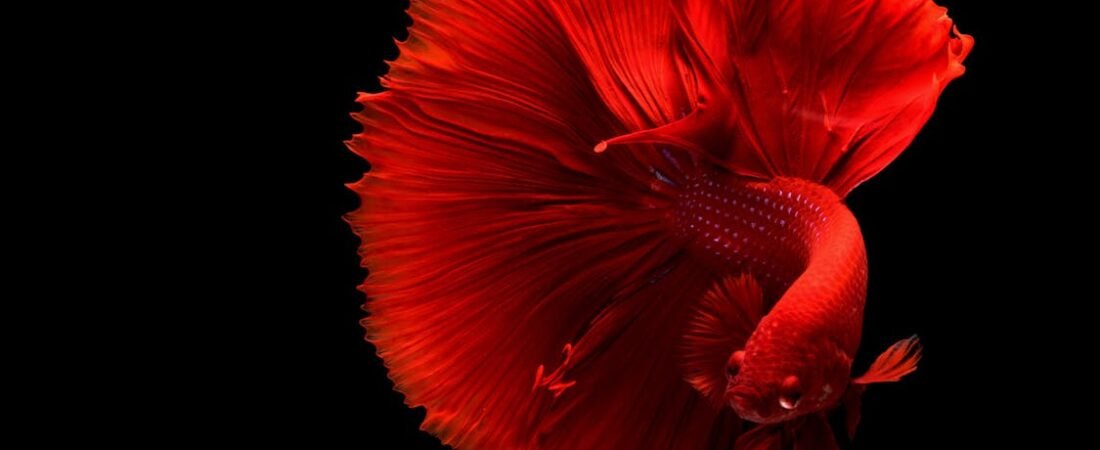
When a betta’s fins start looking tattered, the quickest way to tell betta fin rot from fin biting is to look at the edges and the timing. Fin rot leaves soft, blackened, or ragged edges that creep inward over several days, while fin biting produces clean, U-shaped tears that seem to appear overnight. Water quality usually tells the rest of the story, since fin rot almost always follows stressed water, and fin biting often follows stressed fish.
There is a particular kind of heartbreak that comes with looking into a tank one morning and noticing that the graceful fins of a betta fish suddenly look frayed. The worry sets in quickly. Is the fish sick? Is something in the tank? Has something been wrong for a while without anyone noticing?
A Quiet Morning with Finley
The first time I saw this, I was standing in front of the small five-gallon tank that held our halfmoon betta, Finley. His long, flowing tail had always been the centerpiece of the little room, drifting behind him like a silk scarf as he patrolled between the silk plants. That particular morning, the edges of his tail looked shredded. Not a clean tear, but something that looked raggedy and unfamiliar.
My first thought was fin rot. My second thought was panic. My third thought, thankfully, was to slow down, test the water, and look more carefully before doing anything drastic. That last instinct is the one that saved us from the wrong treatment, and it is the one I want to share with anyone looking into a tank and feeling that same wave of worry.
The Telltale Signs of Betta Fin Rot
Fin rot is a bacterial or fungal infection that usually takes hold when water quality has drifted. It does not happen in an instant. Instead, it creeps in over days, sometimes a week or more. The edges of the fins soften, then darken, then recede. Some fishkeepers describe the look as burnt paper, the way the edges appear charred and curled rather than cleanly broken.
Other signs tend to travel with fin rot. A fish with a real infection often acts differently. They may rest more than usual, eat less, or hold their fins clamped close to their body rather than flaring them in the usual way. The water, when tested, often shows ammonia or nitrite above zero, or a nitrate level that has crept too high between water changes. If the test kit numbers look off, the infection usually has a clear explanation behind it.
What Fin Biting Looks Like
Fin biting is a different story. Bettas, especially those with long, heavy fins like halfmoons and rosetails, sometimes turn on their own tails. The damage from biting shows up fast, often overnight, and the tears look clean. Think U-shaped notches, or ribbon-like strips, or sudden chunks missing from the edges of the caudal fin. The remaining fin tissue looks healthy, not blackened or fuzzy.
The fish usually still acts like themselves. They eat well, they flare, they patrol the tank. That is one of the clearest signals. A betta with fin rot often looks ill. A betta who has bitten their own fins often looks annoyed at most.
Why Bettas Bite Their Fins in the First Place
Fin biting is less about disease and more about stress or boredom. The fins are heavy. The fish may be frustrated by a bored mind, a tank that is too small, a current that pushes them around, or even sudden changes in lighting. Some long-finned bettas seem to chew when they cannot swim the way they want to. It is a coping behavior, and the fish deserves understanding, not scolding.
Our Finley turned out to be a biter. His water tested clean, his behavior was normal, and the tears were sharp and sudden. Once we understood what was happening, we could shift focus from treating an infection to reducing the things that were making him feel unsettled.
How to Tell Them Apart at a Glance
When looking at the fins, three questions help sort the two apart quickly. First, how fast did the damage appear? Overnight usually points to biting. Several days usually points to rot. Second, how do the edges look? Clean tears suggest biting. Fuzzy, darkened, or receding edges suggest rot. Third, how is the fish otherwise? A lively, curious fish with a good appetite rarely has a serious infection, while a lethargic fish with clamped fins often does.
If it is still unclear, the water is the tiebreaker. Good water quality makes rot unlikely. Poor water quality makes rot likely and fin biting secondary.
Gentle First Steps, No Matter Which It Is
The beautiful thing about early betta fin damage is that most cases resolve on their own with patience and clean water. The fish’s body is designed to heal, and the fins will regrow over the course of weeks if the environment stays stable. That is the simplest and most reliable treatment there is.
A careful water change routine is usually the first place to start, keeping nitrates low and parameters steady without making sudden swings. A good water conditioner helps, too, especially one that contains aloe to support the slime coat. The one we keep on the shelf is API Stress Coat. It is gentle, it removes chlorine, and the aloe component seems to comfort fish during a stressful stretch.
For bettas in particular, a handful of Indian almond leaves can help. They release tannins that gently lower pH, soften the water, and carry mild antibacterial properties. Tank water tinted a soft tea color is often a sign of a happy betta. The leaves are not a cure for serious infections, but they create a calmer, more natural environment that many bettas seem to settle into visibly within a day or two.
Helping a Fin Biter Feel Settled
For a betta who is biting, the goal is to take the edge off their restlessness without changing too much at once. A tank that feels interesting and safe goes a long way. Low flow matters, since heavy fins struggle against strong currents, and a sponge filter or a baffled output can make a real difference. Plants matter, too. Soft-leafed plants give a betta places to rest and hide, which often reduces biting behavior over time.
We added two changes to Finley’s tank after we realized he was biting. A Zoo Med betta leaf hammock gave him a resting place near the surface where he liked to linger between patrols. And a set of soft silk aquarium plants replaced a couple of older decorations with sharper edges that we now suspect had contributed to some of the fin damage. Real plants work beautifully too if that fits the setup, and our planted betta tank guide walks through starting points for anyone curious.
When to Call a Vet
Most betta fin damage does not need outside help. That said, there are a few signs that warrant a conversation with an aquatic veterinarian. If the fin damage keeps advancing despite clean water and steady care, if the fish develops white fuzzy patches on the body, if they stop eating for more than three days, or if the fin erosion reaches the body itself, those are all reasons to reach out to a professional. An aquatic vet can prescribe medications that are far more targeted than the general antibiotics sold at pet stores.
Common Questions
Will a betta’s fins grow back after fin rot or biting?
In most cases yes, though it takes time. Betta fins can regenerate fully over four to eight weeks in clean, stable water, and sometimes the new growth comes in a slightly different color than the original. Severe damage that reaches the fin rays can leave some permanent changes, but the fish often still thrives.
Should aquarium salt be used to treat betta fin rot?
Aquarium salt can help mild cases, but it is not a cure-all, and bettas are sensitive to it. Most mild fin rot clears up with clean water alone. Salt is best reserved for cases that are not responding to water quality improvements, and it should always be dosed carefully according to package directions, never guessed at.
Can fin biting turn into fin rot?
Yes, this is worth watching for. Torn fins are open wounds, and dirty water can allow bacteria to take hold at the ragged edges. Keeping water parameters steady during a biting phase is the best way to prevent a secondary infection from developing on top of the damage.
Looking at a betta with tattered fins is hard. It is easy to spiral into worst-case thinking. But most of the time, the answer is a simple one, found by slowing down, testing the water, and watching the fish carefully before reaching for medication. Pour a cup of tea, pull up a chair next to the tank, and just observe for a while. More often than not, the fish is already on their way back to whole, and the kindest thing anyone can offer is a calm, steady home to heal in.
Leave a Reply
You must be logged in to post a comment.