
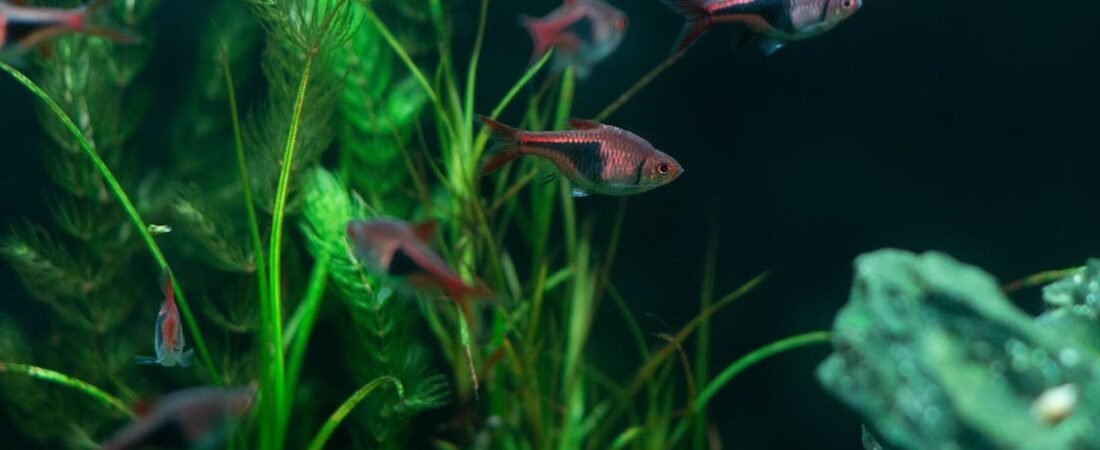
Why is there algae in your fish tank? The short answer is: because your tank is alive. Algae grows in nearly every aquarium at some point, and rather than signaling failure, each type is your tank’s way of communicating something about its environment. Learning to read those signals is one of the quietest and most satisfying skills in fishkeeping.
When I noticed a dusty brown film creeping across my gravel a few weeks after setting up my first aquarium, my first instinct was to panic and scrub everything down. A friend who had been keeping fish for years talked me out of it. “That tank is just waking up,” she said. She was right, and that little moment of reassurance changed how I approach algae entirely. It is not a problem to be defeated. It is a conversation to be understood.
Brown Algae: Your Tank Is Just Getting Started
Brown algae, sometimes called diatoms, are the most common type to appear in a newly established aquarium. They show up as a dusty, rust-colored film on the glass, gravel, decorations, and sometimes plant leaves. The appearance tends to peak somewhere between two and six weeks after setup, right when the nitrogen cycle is in its most active phase.
Diatoms thrive in low-light conditions and on the silica that leaches from new substrates. As the tank matures and beneficial bacteria establish themselves, the conditions that favor diatoms fade, and the film almost always clears on its own within four to eight weeks. The best thing to do during this phase is largely to wait. Gentle wipes with a soft cloth during water changes can tidy the glass a little, but aggressive cleaning at this stage disrupts the biological balance you are trying to build.
If the brown coating lingers past the two-month mark, it is worth taking a closer look at your lighting schedule. Diatoms can persist in tanks that run lights for too few hours, or in tanks positioned far from any natural light. Adjusting your photoperiod to a steady six to eight hours a day, using a simple outlet timer, can sometimes tip the balance in favor of healthier algae types or none at all. On lighting choices for planted tanks, our post on aquarium lighting for healthy plants goes into much more detail.
Green Spot Algae: The Tank Wants a Little More Balance
Green spot algae appears as small, hard green circles pressed flat against the glass. Unlike the dusty film of brown algae, these spots are stubborn and will not wipe away easily. They tend to show up on slower-growing plants and on glass that receives consistent light exposure.
This type of algae often indicates that plants in the tank are slightly underfertilized, or that phosphate levels are on the lower end. Healthy, fast-growing plants compete with algae for nutrients. When the plants are not getting quite enough to stay vigorous, algae fills the gap. If you are not already testing your water parameters regularly, this is a good moment to start. Our guide to reading your aquarium water test kit covers exactly what to look for.
For the spots themselves, a good magnetic glass cleaner makes the job genuinely satisfying. We have been using the FL!PPER Flipper Nano for smaller tanks, and the way it glides across the glass without getting your hands wet turns a chore into something almost meditative. The scraper side handles even older, hardened spots without scratching. For a little ongoing prevention, adding a few more live plants or bumping up your fertilizer dose slightly can reduce how quickly the spots return.
Hair Algae and Thread Algae: When Light Runs Long
Hair algae is the one most aquarists find frustrating. It grows as long, thin green strands that tangle around plants, attach to driftwood, and spread visibly when conditions favor it. Thread algae is similar but finer, forming a soft wispy layer rather than distinct strands. Both tend to arrive when a tank is getting more light than the plants can use.
The most common culprits are a photoperiod that runs too long (ten to twelve hours is often too much for a low-tech tank), a tank positioned near a window with additional natural light, or an imbalance where light exceeds what the plants and nutrients can match. Reducing the lighting period to a firm six to eight hours each day is usually the first and most effective step. A plug-in outlet timer like the BN-LINK 24 Hour Mechanical Timer takes the guesswork out of this entirely. Set it once and let it run the same schedule every day. Consistency matters more than perfection with aquarium lighting.
For a more targeted approach to existing patches, a liquid carbon supplement like Seachem Flourish Excel can be applied directly to algae clusters using a syringe during a water change. The treatment does not work overnight, but used patiently over a week or two, most tangles of hair algae will brown and loosen. It worked well in our experience, though the tank had to be doing reasonably well otherwise for the improvement to hold.
Regular water changes also help by diluting the excess nutrients that algae feeds on. If you have not yet settled into a consistent water change routine, our post on aquarium water changes might be a gentle place to start.
Blue-Green Algae: When Something Deeper Is Off
Blue-green algae is the one type that genuinely warrants attention, partly because it is not actually algae at all. It is cyanobacteria, a photosynthetic bacteria that forms thick, slimy mats in shades of blue-green, teal, or even purple-black. It has a distinctive earthy or musty smell, and once you have encountered it you will recognize it immediately. It tends to drape over plants and substrate in sheets rather than growing in isolated patches.
Cyanobacteria thrive in conditions of low water movement, excess organic waste, and low nitrate levels. This might sound counterintuitive, since most algae problems come from too many nutrients, but blue-green algae can actually outcompete other life in a tank that has been so well-maintained that nitrates are nearly zero. It also appears frequently in tanks with poor circulation near the substrate, where waste accumulates and oxygen stays low.
The most reliable treatment is a three-day blackout combined with increased circulation. Cover the tank completely to block all light, increase the output of your filter or add an air stone for flow, and do a significant water change before starting. After the blackout, manual removal of any remaining sheets followed by a second large water change usually clears it. Catching it early makes this process much easier, so if you notice an unusual smell or a spreading slick of colored film, act sooner rather than later.
Common Questions
Is it safe to have some algae in my aquarium?
A small amount of algae is completely normal and even beneficial in most aquariums. It provides trace food for certain fish and invertebrates, and its presence often signals that the tank’s ecosystem is active and functioning. The goal is not an algae-free tank but a balanced one where algae grows slowly and stays manageable.
Why does my new tank have so much brown algae?
Brown algae in a new tank is caused by diatoms, single-celled organisms that thrive in the silica and instability of a freshly set-up aquarium. Most tanks go through this phase during the first four to eight weeks, and it clears naturally as beneficial bacteria establish and the tank matures. Gentle wipes during water changes can tidy the glass, but the process mostly just needs time.
How many hours of light should I run to prevent algae?
For most freshwater community and planted tanks, six to eight hours of consistent daily lighting is a good starting range. Running lights longer than ten hours, especially in tanks with moderate nutrients, is one of the most common causes of hair algae and green water. A simple outlet timer removes the guesswork and ensures your tank gets the same schedule every day.
Once you start reading algae as information rather than inconvenience, the whole rhythm of tank keeping shifts a little. There is something quietly satisfying about looking at a bit of brown dust on your glass and knowing it is just your tank finding its footing. Give it the time it asks for, adjust what needs adjusting, and trust that you and your aquarium are learning the same language together.
Leave a Reply
You must be logged in to post a comment.