
Easy aquarium plants for beginners do exist, and they have almost nothing in common with the high-maintenance setups that can make planted tanks seem so intimidating at first glance. There is no pressurized CO2 equipment, no specialized substrate, no precise fertilizer schedules required. Three of the most dependable live plants for a beginner tank, java fern, anubias, and hornwort, ask very little and give back a great deal.
The first time a planted aquarium came up in conversation at a fish forum, the advice section was full of terms that felt more like a chemistry exam than a hobby. CO2 diffusers, photoperiod timers, iron chelate dosing. It was enough to make anyone reach for a bag of plastic plants instead. But somewhere between reading one too many threads and finally just trying something, a small java fern went into a corner of the tank. That was the beginning of a quieter, greener way of keeping fish.
Why Live Aquarium Plants Are Worth It for Beginners
Live aquarium plants do more than look beautiful. They absorb ammonia and nitrates from the water, which takes some of the pressure off the filter and helps keep water parameters more stable between changes. For fish, especially those that come from heavily vegetated rivers and streams in the wild, a planted tank simply feels more like home.
Plants also create natural territories and hiding spots that reduce stress between tank mates. A betta who has places to rest near the surface, a school of tetras that can weave between broad leaves, a shrimp colony that feels sheltered enough to come out and forage. If you are curious about how plants fit into a betta setup specifically, there is a lovely foundation to build on in our guide to setting up a first planted betta tank.
Java Fern: A Plant That Practically Grows Itself
Java fern is the plant that converts skeptics. It is an epiphytic species, which means it does not draw nutrients through its roots the way most plants do. Instead, it anchors itself to hardscape like driftwood or rocks and absorbs nutrients directly from the water column through its leaves. This distinction matters because burying the rhizome, the thick horizontal stem from which leaves sprout, in substrate will cause it to rot. Simply tie it loosely to a piece of wood or hold it in place with a small piece of fishing line until it attaches on its own.
Java fern tolerates a wide range of lighting conditions, does not need CO2, and grows slowly enough that it rarely needs trimming. The leaves have a leathery texture that most fish, including goldfish and cichlids who nibble at softer plants, tend to leave alone. New plants sprout from tiny black dots on the undersides of mature leaves, which is one of the more quietly satisfying things to notice in a tank that has found its rhythm. The SubstrateSource Java Fern bare root is a solid starting point, arriving clean and ready to attach to whatever hardscape is already in the tank.
Anubias: Slow, Steady, and Surprisingly Tough
Anubias is the plant for people who have managed to kill everything else. It grows slowly, tolerates low light, and has thick, waxy leaves that resist algae far better than softer species. Like java fern, it is an epiphyte and should be attached to hardscape rather than buried in substrate. Covering the rhizome is the one mistake that reliably causes problems.
The smaller varieties, particularly anubias nana and anubias nana petite, are well suited to most freshwater tanks from compact ten-gallon setups to larger community aquariums. They can be positioned in mid-ground or left to float freely for a while as they settle in. SubstrateSource Anubias Nana comes in a pot with a clean root structure and is beginner-friendly by design. The slow growth can feel discouraging at first, but a healthy anubias that has been in place for six months becomes a genuinely lovely anchor in any planted corner.
Hornwort: For When Something Just Needs to Grow
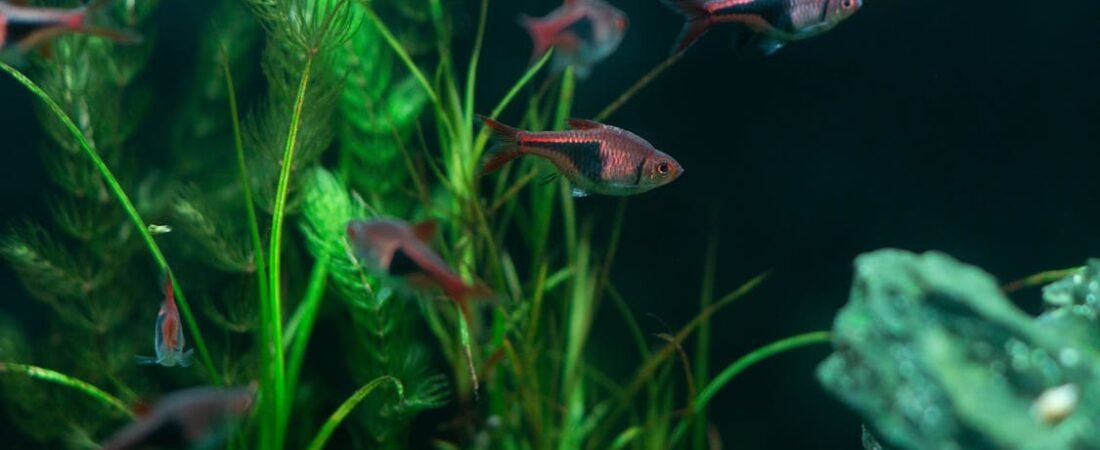
Hornwort is the fast grower in this group, and it earns its place in a beginner tank by doing something the slow-growers cannot: outcompeting algae. Because it takes up nutrients quickly, it pulls the excess nitrates and phosphates from the water that would otherwise feed algae blooms. It can be planted loosely in substrate, tucked into a corner, or left floating near the surface where it catches the light easily.
It does shed its fine needles more than the other two, which means a little extra maintenance during water changes. For most beginner tanks, that is a small price for how reliably it thrives. If the tank lighting situation is still being figured out, hornwort is a forgiving choice. A read through our guide to aquarium lighting for healthy plants can help match the light to the plants already in the tank, or the plants being considered next.
A Few Small Things That Help
Live plants do not require much, but a small amount of support goes a long way. A liquid fertilizer added once or twice a week gives the plants access to trace elements and micronutrients that can be depleted in a well-filtered tank. Seachem Flourish Comprehensive is a widely trusted option that is gentle enough for tanks with shrimp and invertebrates. A small dose goes a long way, and the 250mL bottle tends to last a beginner tank several months.
Standard aquarium LED lighting, the kind that comes with most beginner setups, is sufficient for all three of these plants. None of them need high-intensity light. Keeping the light on for around eight to ten hours per day gives them enough energy to photosynthesize without encouraging algae growth. And when leaves turn a little pale or slow their growth during a transition period, patience is usually the right response. Plants take time to adjust to a new environment, much like the fish that share their water. See how that gentle settling-in process works in our guide to helping new fish feel at home, because the principle carries over surprisingly well to plants too.
Common Questions
Do easy aquarium plants for beginners need CO2 injection?
Java fern, anubias, and hornwort all grow well without CO2 injection. These low-tech plants absorb carbon dioxide naturally from the water column, which is typically sufficient in a fish tank with normal surface agitation. CO2 systems become relevant for fast-growing, high-light plants in more advanced setups, but they are not part of the beginner plant toolkit.
Can java fern and anubias go in a betta tank?
Both are excellent choices for betta tanks. Java fern and anubias provide broad leaves that bettas enjoy resting on near the surface, and their tough textures hold up well against curious fish who like to investigate their surroundings. A betta tank with a few anubias and a piece of driftwood anchoring a java fern tends to feel genuinely settled and calm.
Why are the leaves on my aquarium plants turning yellow?
Yellowing leaves in beginner tanks usually point to one of two things: a nutrient deficiency, often iron or magnesium, or adjustment stress from being moved to a new environment. Adding a small dose of a comprehensive liquid fertilizer like Seachem Flourish once a week addresses most nutrient gaps. If the yellowing appears on older leaves while new growth looks healthy and green, the plant is simply redirecting its energy and is likely doing fine.
There is something quietly rewarding about a tank that feels genuinely alive, not because of its size or the complexity of its setup, but because something is actually growing in it. A java fern spreading new leaves from its rhizome, an anubias sitting patient and dark green in the corner, hornwort trailing softly near the surface. The tank becomes less of a display and more of a small, self-sustaining world. That is worth starting slowly and seeing where it goes.
Leave a Reply
You must be logged in to post a comment.